
Fresh-control film.
Developed together.
Frectro and the Guangdong Institute of Laser Plasma Accelerator Technology (GLAPA) collaborate on fresh-control film development. Our joint laboratory connects laser microperforation, film engineering and produce trials.
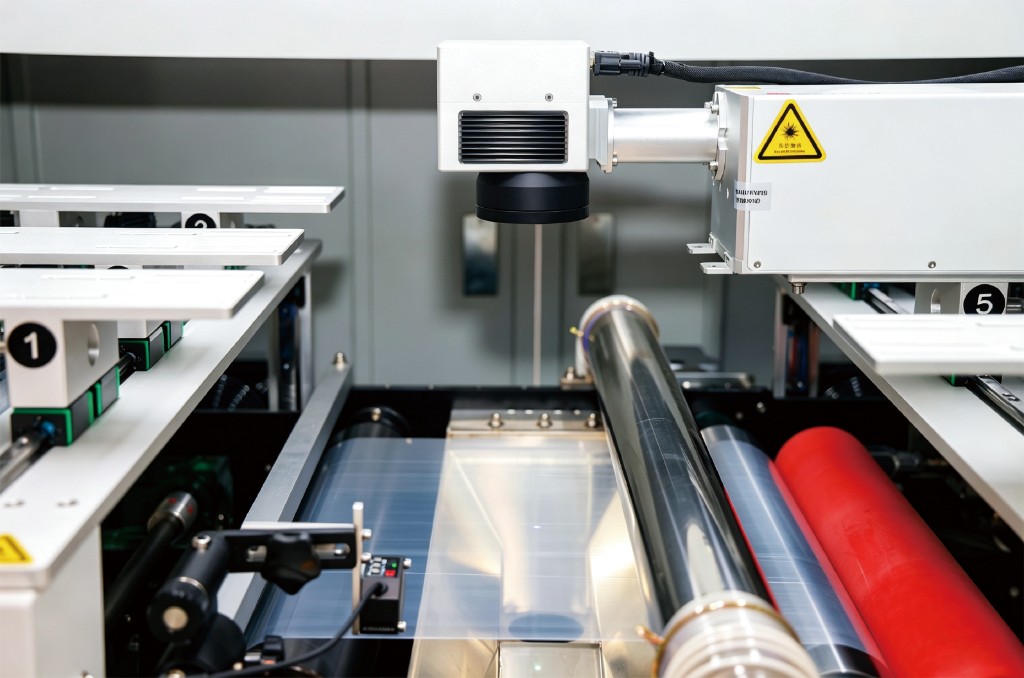
Laser Institute · Frectro Joint Laboratory
Based at the institute, our joint R&D platform brings specialist researchers and fresh-produce packaging development together. The work focuses on fresh-control film, its production technology and testing under defined produce and storage conditions.
Institute research & equipment
The institute provides research support for film development and production technology. Its high-precision laser microperforation equipment is a core tool for producing micrometre-scale openings in the film.
Frectro produce applications
Frectro combines precision film with AI-assisted calibration around produce variety, maturity, temperature and packing parameters. Joint-laboratory respiration and quality observations inform subsequent development.
Laser precision. A film configured for your produce.
Fresh produce continues to respire after harvest. Controlled microperforations allow the film’s gas and moisture exchange to be configured for the intended produce and pack. The proposed configuration is then evaluated in application trials.
Laser microperforation
Institute-developed laser equipment creates micrometre-scale openings in the film. The hole configuration is selected around the produce and packaging scenario.
Development focus: controlled openings in the film.
Film configuration
Produce variety, maturity, packing weight, storage temperature and handling requirements guide the proposed film and pack. AI-assisted calibration takes place during development, before the packaging is used.
Development focus: a proposed specification and agreed trial conditions.
Produce trials
Joint-laboratory observations of respiration and quality under different temperatures and packaging conditions feed back into calibration and subsequent film development.
Development focus: observations to review against the target quality and trial conditions.
Results need their conditions.
Brand-reported joint-laboratory storage results. Published unpackaged durations provide context; evaluate the proposed packaging under your own handling conditions.
Aromatic lemon
Test temperature · 30°C
25 days
With Frectro film
Published unpackaged reference: 3 days
Cherries
Test temperature · 4–8°C
22 days
With Frectro film
Storage result; reference temperature needs clarification
Monthong durian
Test temperature · 25°C
4 days
With Frectro film
Published unpackaged reference: 2 days
What these examples show
The reported result varies by produce and temperature. They provide starting points for a discussion about suitable packaging and a trial under your handling conditions.
How to read the cherry result
The cherry example describes storage at 4–8°C, not a completed sea-freight trial.
These are brand-reported storage results. Produce condition, temperature and handling affect outcomes; validate the packaging under your own conditions.
Three packaging methods. Defined conditions.
Compare the reported observations for open storage, standard bags and Frectro film under the produce, duration and temperature shown.
Yellow peach
8 days · 30°C
| Packaging | Reported observation |
|---|---|
| Open storage | Severe spoilage |
| Standard bag | Severe browning |
| Frectro film | Minor mould spots |
Chili
11 days · 25°C
| Packaging | Reported observation |
|---|---|
| Open storage | Shrivelled and mouldy |
| Standard bag | Yellowed and mouldy |
| Frectro film | Normal appearance |
Mini cucumber
20 days · 4–8°C
| Packaging | Reported observation |
|---|---|
| Open storage | Yellowed and soft |
| Standard bag | Yellowed and soft |
| Frectro film | Slightly yellowed; still crisp |
A research partner with academic foundations.
Guangdong Institute of Laser Plasma Accelerator Technology
Jointly established by the Guangzhou Municipal Government, the Baiyun District Government and Peking University, GLAPA focuses on laser and plasma technologies and their translation into industrial applications.
- Provincial recognition. Recognition as a Guangdong high-level innovation institute was reported in January 2022.
- Academic collaboration. The institute’s research platform includes a Peking University–GLAPA joint laboratory and academic training bases.
- Applied engineering. Its development model connects original research, key technologies, system integration, engineering and commercial translation.
Public institutional background →
Provincial innovation recognition →
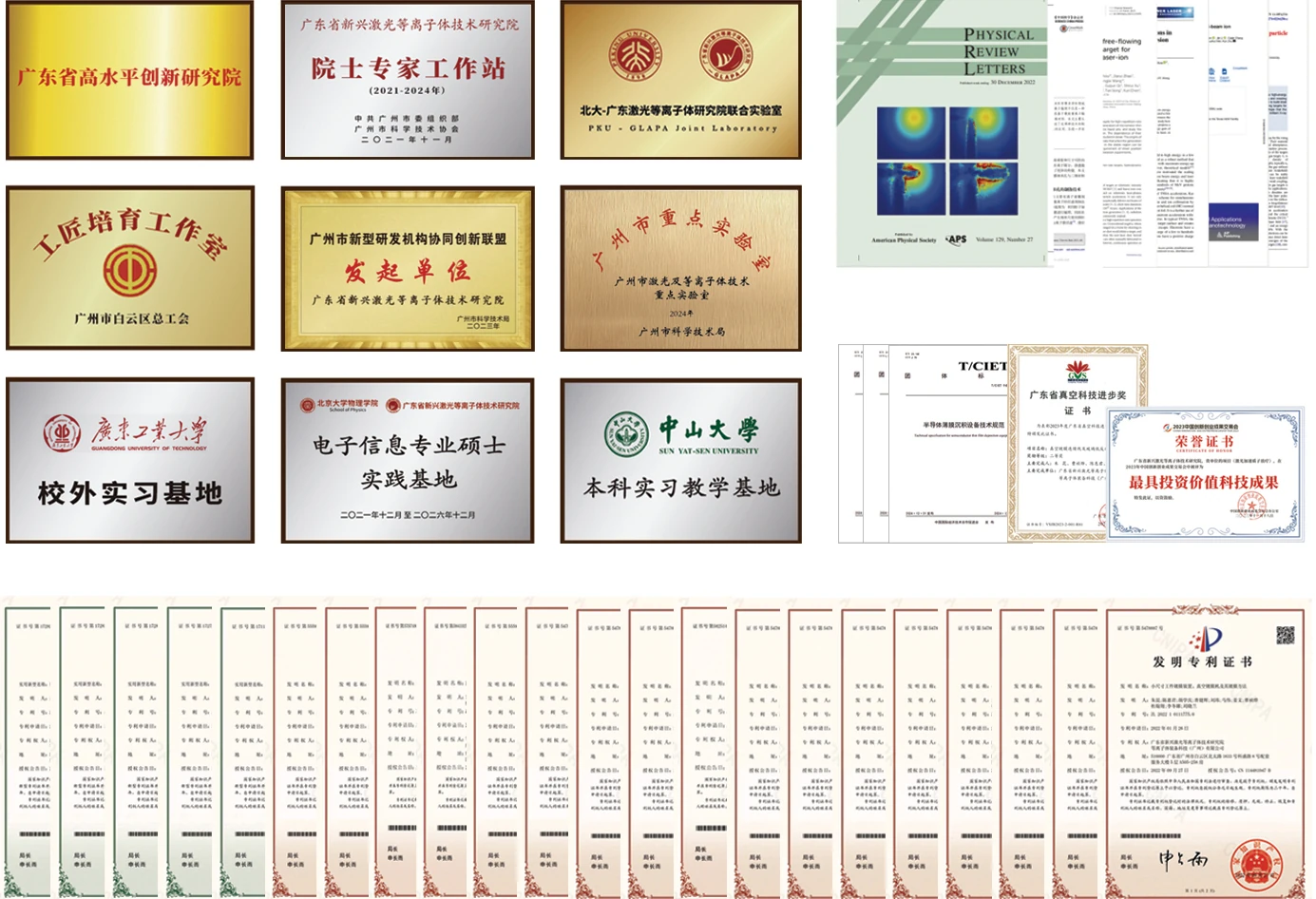
The institute’s wider research platform.
Facilities for laser research, ion sources, plasma surface processing and thin-film deposition. This gallery presents the research partner’s broader capabilities; the film-development work is described above.
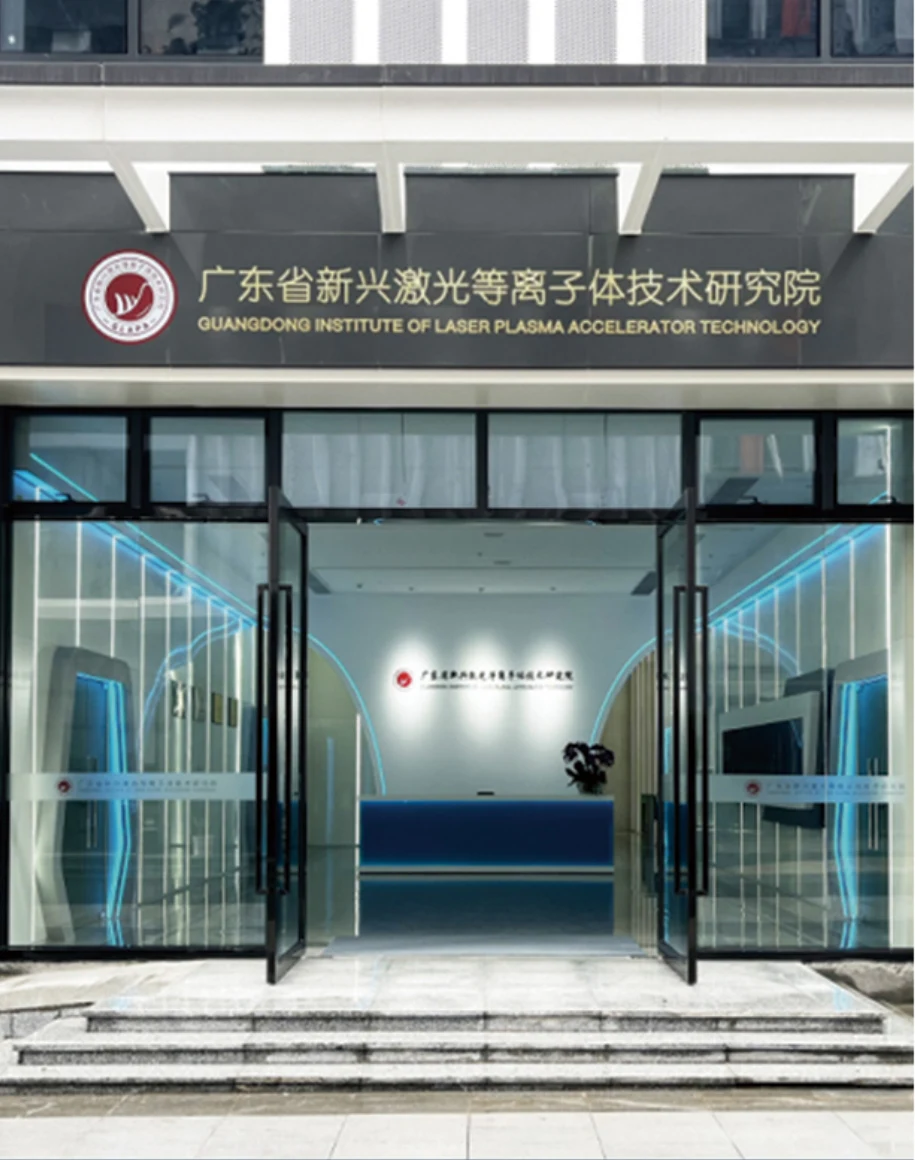
Institute in Guangzhou
Guangdong Institute of Laser Plasma Accelerator Technology, the research partner for the joint laboratory.
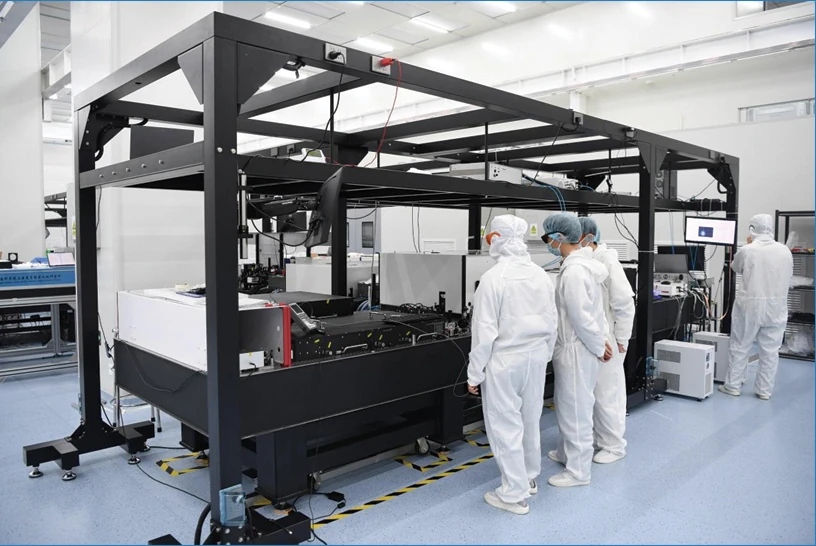
Femtosecond laser research
The institute also conducts ultrafast, high-intensity laser research. This 200 TW facility illustrates its broader laser expertise.
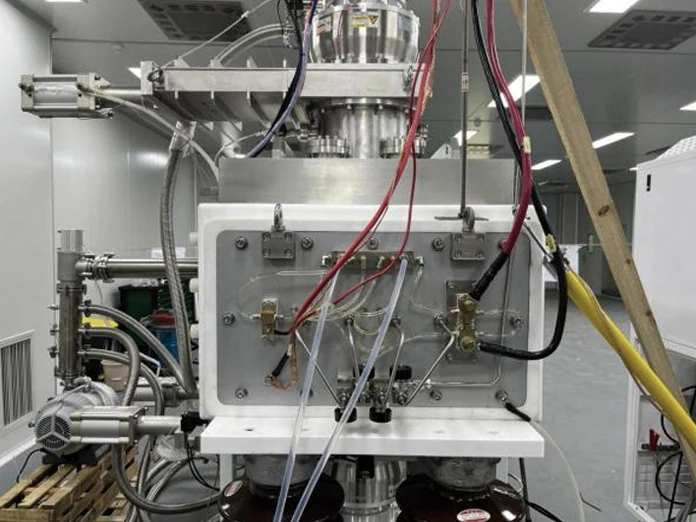
Wide-beam ion source
Ion-source engineering supporting the institute’s work on plasma coating and ion-processing equipment.
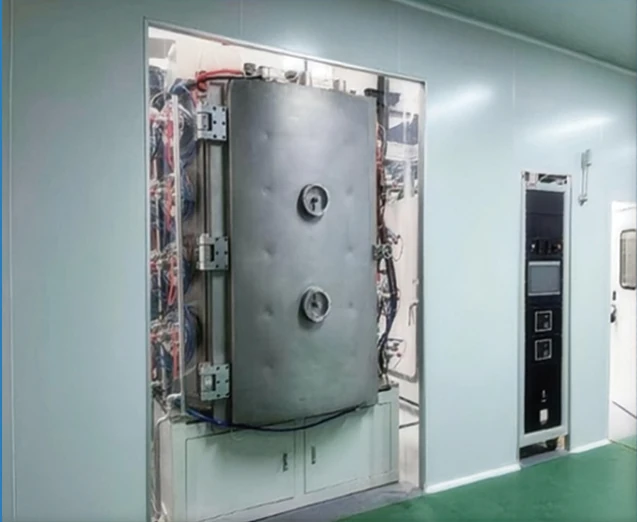
Plasma coating equipment
Vacuum plasma processing and coating equipment, connecting materials-process research with engineered systems.
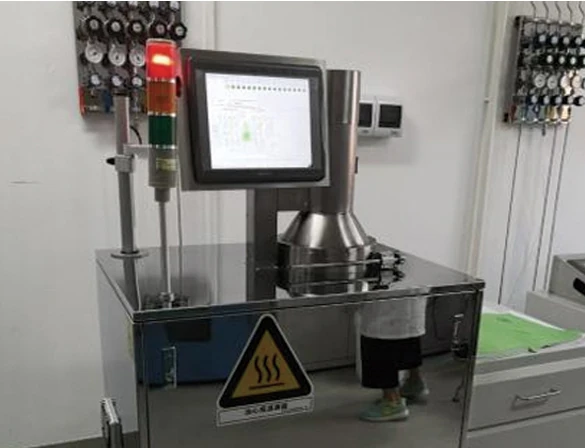
Atomic layer deposition
Remote plasma-enhanced ALD equipment for thin-film deposition research. The institute develops both single-chamber and roll-to-roll ALD equipment.
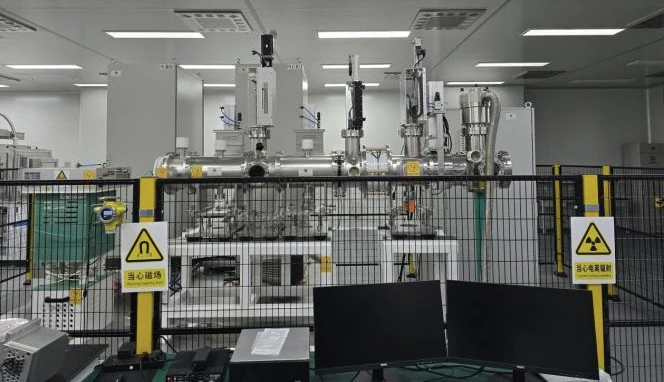
Ion implantation
A 50 kV ion implantation system presented for materials-modification research, including work supplied to Harbin Institute of Technology, Shenzhen.
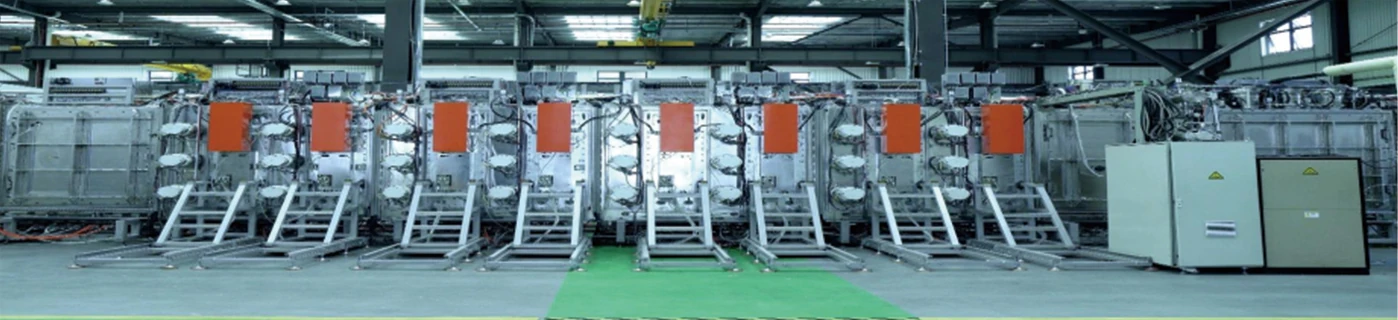
These photographs show the institute’s broader research portfolio. Frectro’s produce-film development is described in the laser microperforation and application-trial sections.
Research that reaches industrial applications.
The institute’s development model combines a research institute, a technology-transfer company, an industrial park, a talent center and an equipment-focused investment fund. This connects scientific work with engineering, company incubation and industrial applications.
Its industrial portfolio includes precision polishing, vacuum plasma coating and advanced membrane materials, alongside laser and ion-processing equipment.
Start with a trial you can evaluate.
Agree the conditions and comparison before selecting a final film specification.
- Produce: use the same batch with comparable variety, maturity, initial quality and pack weight.
- Handling: define the packing method, route, temperature profile and target duration; record actual temperatures during the trial.
- Comparison: use your current packaging as the baseline, with the same produce and handling conditions.
- Sample plan: agree the number of packs, repeat runs and inspection schedule before starting.
- Measurements: define how appearance, weight loss, firmness and visible decay will be recorded and assessed.
- Decision: agree acceptable quality at arrival and after retail display, then review the results against that target.
Bring us your produce and route.
Share your current packaging and the problem you want to solve. We can discuss a suitable format and a proposed trial configuration.